
Why Pokhara Belongs on Your Bucket List
If you have travel plans for Nepal, Pokhara can definitely be on your list of places to visit. Located next to a serene lake and the majestic Annapurna mountains, Pokhara is a lively city that offers the perfect blend of natural surroundings, adventure, and cultural events. If you are looking for relaxation, adventure, or photography, Pokhara will not disappoint.
The uniqueness of Pokhara comes from its flexibility in accommodating all kinds of travelers. While adventure seekers may choose to go paragliding in the skies or start their hiking adventure trails towards the Himalayan range, people who seek tranquility can take a leisurely cruise on the water, sit at lakeside coffee shops, and watch the snowcapped mountains greet the sunrise.
Apart from being picturesque in nature, Pokhara also reveals the unique culture and history of Nepal. The temples, caves, and locals give one an insight into the culture of Nepal, apart from providing the beauty of the city.
Right from famous landmarks such as Phewa Lake and Sarangkot to secret spots yet to be discovered, Pokhara definitely leaves a lasting impact on the lives of almost all tourists. But if you are curious about what sites to add to your trip itinerary list, here are seven top sights of Pokhara that you should visit.
The Ultimate Top 7 Attractions You Absolutely Can’t Miss
The entire city of Pokhara is brimming with awe-inspiring sights that represent some of the greatest treasures of Nepal in terms of natural beauty, adventure, and culture. Because of tranquil lakes, breathtaking mountain views, spiritual temples, and fascinating caves, every nook and cranny of the city presents its visitors with sights worth remembering. When coming on a holiday visit to Pokhara, whether for a day or an extended duration, finding out which locations should not be missed can help make their trip more interesting. Listed below are seven such iconic locations of Pokhara that you cannot afford to miss.
Tal Barahi Mandir
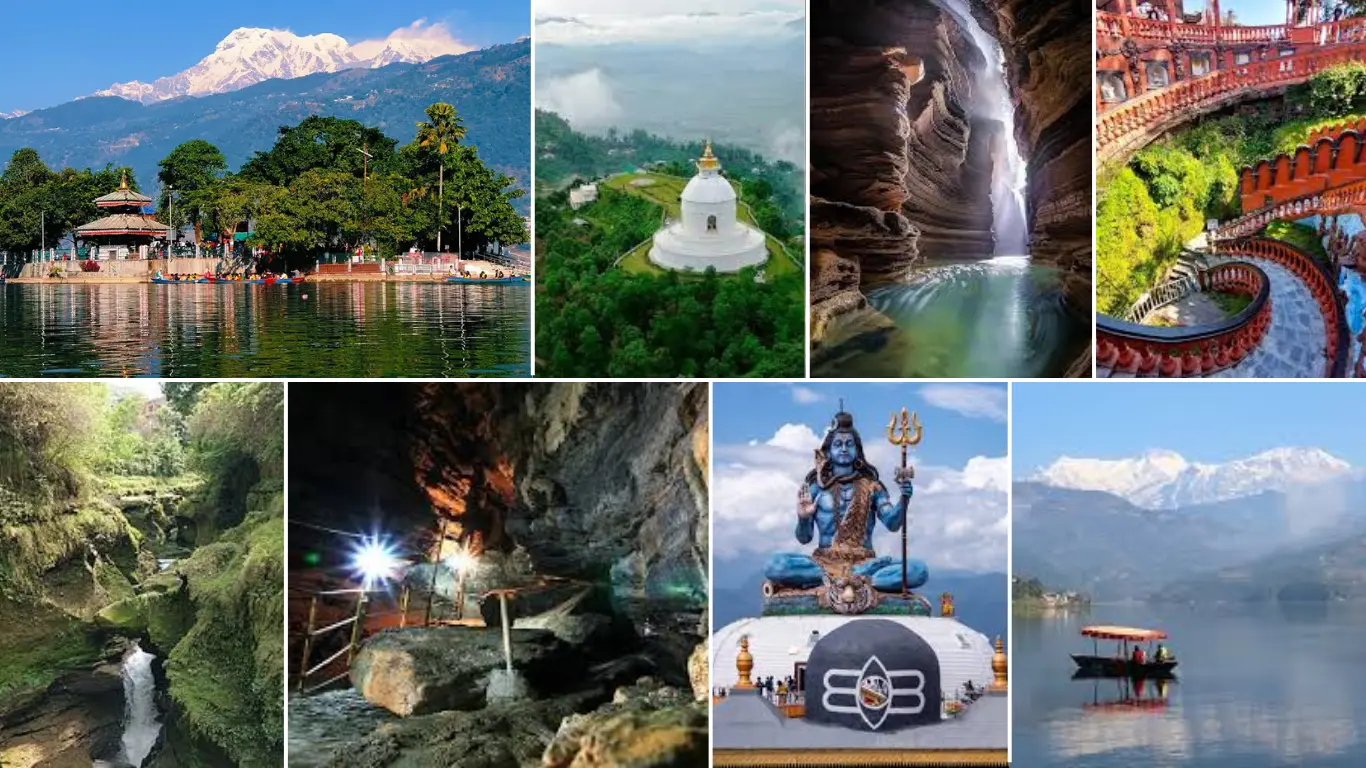
Tal Barahi Mandir is located on an island at the center of Phewa Lake, which is among the top spiritual and symbolic landmarks in Pokhara. It takes time to reach Tal Barahi Temple because visitors have to take a boat ride through the serene water and past the majestic view of the Annapurna mountain range.
"Tal Barahi" is symbolic of a very significant connotation. According to the Nepali language, "Tal" means "lake," while "Barahi" signifies a Hindu Goddess known as Barahi, which represents a manifestation of Goddess Durga. Therefore, "Tal Barahi" is symbolic of "Barahi temple of the lake."
The pagoda-style temple, built in two stories, is visited by pilgrims and tourists all year round. You will get to see colorful offerings made for prayers, along with beautiful architecture, as you approach the island against the background of serene lake water.
In addition to being a sacred place for followers of Hinduism, the temple also allows tourists an insight into the local culture of Pokhara. Photography is highly encouraged by visitors due to the picturesque reflection of the surrounding hills and mountains in the lake waters during sunrise and sunset times. Feeding the fish and watching local people perform rituals are other enjoyable activities here.
Whether you're interested in spirituality, photography, or cultural exploration, Tal Barahi Mandir is a must-visit destination that captures the essence of Pokhara's charm.
World Peace Pagoda
Its name alone denotes its function. The word “pagoda” means the architectural style of the Buddhist structure, whereas the term “World Peace” represents the universal message of the pagoda. Built by Japanese Buddhist monks together with other people in the locality, the stupa is built to remind us of the significance of peace in the increasingly globalized world. The pure white exterior and gold Buddha statues add to the tranquility of the place.
The most important features of the World Peace Pagoda that visitors enjoy include its amazing scenery from its summit. Tourists get an opportunity to see the scenic beauty of Phewa Lake, Pokhara Valley, and the mountain ranges of Annapurna and Dhaulagiri. This beauty is even more beautiful at sunrise and sunset times.
But even before visiting the destination, the trek to the pagoda is an experience in itself. Some tourists prefer to hike through the forest path, whereas others are reached by vehicles. After reaching the pagoda, you can freely explore the monument, take photos, and bask in the beautiful atmosphere of one of Pokhara’s most inspirational destinations.
Gupteshwor Mahadev Cave
Gupteshwor Mahadev Cave happens to be one of the most intriguing caves of Pokhara, which earns its name by offering a perfect fusion of religion and nature. This limestone cave lies close to Davis Falls, and it is quite a deep place to visit, unlike some other tourist spots in Pokhara. Here, you can find narrow passageways along with rock formations created by nature itself.
"Gupteshwar Mahadev" holds great significance as far as its name is concerned. The term Gupteshwar, in the Sanskrit and Nepali languages, refers to "the hidden god". Mahadev is among the most respected names of Lord Shiva. The cave has been named in reverence of a lingam of Lord Shiva, which is believed to have been hidden inside the cave. Hence, the cave holds great importance for the devotees of Lord Shiva.
Another remarkable characteristic about Gupteshwor Mahadev Cave is its proximity to Davis Falls. The more one advances into the cave, the closer one gets to an observation point from where the fall can be viewed cascading through a small slit at the side of the cave. This site is quite spectacular, not only for its view but also because of the noise that emanates from within.
Besides being a spiritual place, the cave also allows visitors to appreciate some natural attractions in Pokhara. These include viewing fascinating rock formations and discovering legends associated with the cave. The site is ideal for tourists who are interested in combining an adventurous holiday with a cultural and spiritual experience.
Devi's Fall
One of the most notable natural landmarks in Pokhara is Devi's Fall, which has both a strong waterfall and a unique underground drainage system. This landmark can be found just a stone's throw away from the downtown area. Many tourists visit this landmark because it provides the spectacle of the power of water flowing directly under the ground through a tunnel. The waterfall assumes a very dramatic view during the monsoon.
There is an intriguing history behind the name Devi’s Fall. Locally, it is referred to as Patale Chhango, meaning “underground waterfall.” The English name came into existence following the untimely death of a Swiss woman called Davi/Devi, who was said to have drowned due to the strong currents of the water in the 1960s. Ever since, the waterfall has been widely referred to as Devi’s Fall.
Visitors are often captivated by the sight of rushing water plunging into a small hole and vanishing beneath the earth. Unlike some other waterfalls that simply pour out to rivers, Devis Fall is unique because the rushing water is absorbed by nature into its underground tunnels. From viewing stations around the place, tourists can view the waterfalls from several angles.
Apart from the falls themselves, one will find some scenic walking paths, some shops selling souvenirs from the locality, and viewing points that give people information about the formation of this wonder. In addition, when combined with the presence of the Gupteshwor Mahadev Cave at the opposite side of the street, the Devi’s Fall gives visitors a taste of Pokhara’s beauty.
Mahendra Cave
The Mahendra Cave can be said to be one of the most popular natural wonders of Pokhara. Here, tourists get an opportunity to go on an adventure of discovering different rock formations in the cave, which has an air of mystery about it. The Mahendra Cave lies in the northern part of Pokhara. The cave is one of the best places where tourists from both within and outside the country enjoy the experience.
The cave bears the name of “Mahendra Cave” because it is named after King Mahendra Bir Bikram Shah, who once ruled the Kingdom of Nepal. It was given such a name as a result of its development into a popular tourist attraction in the 1950s. Gradually, it became one of the best-known caves of the country.
As you descend into the cavern, you will have to go through some stairs made of rocks that lead you down into the passages of the cavern. Once you are inside, you will see that there are formations of limestone formed over millions of years through the deposition of minerals, which hang from the ceiling and emerge from the floor of the cavern.
Other than being a geographically stunning place, Mahendra Cave has a small temple for Lord Shiva. Several tourists like the idea of visiting this cave at a leisurely pace, clicking photographs inside the natural chambers, and feeling the silence within the cave. If you have plans to go on an adventure with elements of geology as well, then Mahendra Cave should not be missed.
Pumdikot Shiva Statue
The Pumdikot Shiva Statue is arguably among the most stunning and quickly developing tourist attractions located around Pokhara, providing a great combination of spirituality, modern architectural structures, and picturesque surroundings. The monument dedicated to Lord Shiva is situated on a hill south of the town, attracting numerous tourists interested not only in spiritual but also in natural beauties.
"Pumdikot" is the name for the hills around which the statue stands, and the statue itself is in honor of Lord Shiva, who is perhaps one of the most prominent figures in Hindu mythology. It symbolizes rebirth, transformation, and destruction of all that is negative, and it is designed in such a way as to symbolize Lord Shiva watching the valley from the hilltop.
When you visit the location, you will see the massive Shiva statue that stands proudly in a tranquil and majestic pose, with the backdrop of some of the best temples around it. This place is well-developed with stairways and walkways to make it easy for you to move around the area and appreciate all the aspects of this statue.
A major highlight of Pumdikot is the breathtaking scenery it provides. On clear days, one gets to see the Annapurna ranges, the city of Pokhara, and Phewa Lake from up above. However, the most mesmerizing part of the place is the amazing sunsets and sunrises that make it an ideal destination for people seeking spiritual energy amidst nature.
Begnas Lake
Begnas Lake is considered one of the quietest and most naturally scenic lakes in the Pokhara Valley. Situated about 15 to 20 kilometers from the heart of Pokhara, this lake provides a more tranquil choice than the crowded Phewa Lake. Begnas Lake is surrounded by verdant hills and villages that create a serene atmosphere. This makes it a great place for those seeking a more leisurely pace of life.
Begnas is thought to be named based on local geographical and cultural influences, although this is not as well-documented as the naming of some other places within the region. The name Begnas has come to be synonymous with the peaceful nature of the lake, embodying harmony and serenity at Pokhara Lake.
At Begnas Lake, there are a number of simple but unforgettable things for tourists to do. One of the top activities among these is taking a leisurely boat ride and relaxing in the still water while enjoying views of the beautiful mountains and breathing in some fresh air. The lake region itself is not very touristic compared to other regions.
There are also several coffee shops, local food joints, and lookout points where one can relax and soak in the natural beauty around. The early mornings and evenings offer stunning views, owing to the reflection of the sun in the lake and the enhanced color of the hills. If you are looking for a place of natural beauty and tranquility, Begnas Lake is a hidden treasure worth exploring.
Wrapping Up Your Ultimate Pokhara Adventure: Final Thoughts on Pokhara
Pokhara can be considered to be a rare destination that stays on your mind even after the visit is over. Every site in the city provides a unique way of experiencing the splendor of nature and culture, whether in the form of a lake, temple, cave, or viewpoint. For adventurers, travelers seeking enlightenment, or those who just want to have some peace of mind, Pokhara will certainly fulfill your dreams.
It will become evident to you while visiting these seven amazing sites listed above that each one contributes its unique flair to your trip. Some locations are more relaxing, and others are more adventurous; for example, Begnas Lake and the World Peace Pagoda are two places where you can enjoy peace and tranquility, whereas Gupteshwor Mahadev Cave and Mahendra Cave are more adventurous places worth visiting.
What sets Pokhara apart from others is the natural combination of nature, culture, and hospitality that it offers. The warm-hearted locals, the breathtaking views of the Himalayas, and the tranquil pace of living along the lakesides all make for an inspirational vacation destination. Traveling doesn’t just mean visiting places; it also involves experiencing the ambience of the place.
By the time you are done with your visit to Pokhara, there is a very high possibility that the city will not just be a destination but will give you some memories to cherish forever, and even leave you with the desire to visit once again.


.webp)
showing comments